Operating Systems and Networks
A network operating system(NOS) is software that connects multiple devices and computers on the network and allows them to share resources on the network. True network operating systems are categorized as software that enhances the functionality of operating systems by providing added network features. There are two basic types of network operating systems, peer-to-peer NOS and client/serve NOS.
1. Peer-to-peer network operating systems allow users to share network resources saved in a common, accessible network location. In this architecture, all devices are treated equally in terms of functionality. Peer-to-peer usually works best for small to medium LANs and is cheaper to set up.
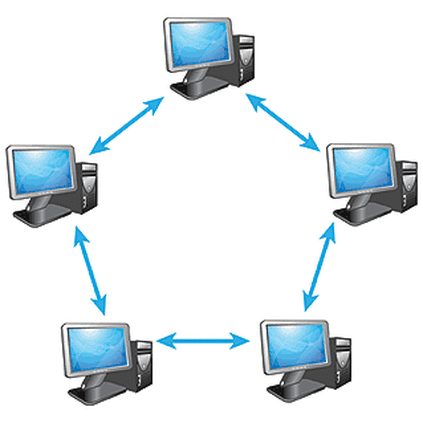
2. Client/server network operating systems provide users with access to resources through a server. In this architecture, all functions and applications are unified under one file server that can be used to execute individual client actions regardless of physical location. Client/server tends to be the most expensive to implement and requires a large amount of technical maintenance. An advantage to the client/server model is that the network is controlled centrally, making changes or additions to technology easier to incorporate.

References
- Lewis, S. (2019) What is a network operating system? - definition from whatis.com, Networking. TechTarget. Available at: https://www.techtarget.com/searchnetworking/definition/network-operating-system (Accessed: December 4, 2022).
- Computer networking (no date) Computer Networking. Available at: http://computernetworkingtopics.weebly.com/ (Accessed: December 4, 2022).
- What is https://i1.wp.com/ ... ?SS1 (2020) WordPress.org Forums. Available at: https://wordpress.org/support/topic/what-is-https-i1-wp-com-ss1/ (Accessed: December 4, 2022).
- Lithmee (2018) Difference between client and server, Pediaa.Com. Available at: https://pediaa.com/difference-between-client-and-server/ (Accessed: December 4, 2022).
Comments
Post a Comment